Source Purse Atomizer for Perfume, Cosmetics, and Essential Oils
Compare 30 purse atomizer options featuring injection molding and customizable colors. Buyers can evaluate suppliers offering FDA and CE certifications for perfume, cosmetics, and essential oil applications with MOQs ranging from 1 to 10,000 pieces.
Key considerations
Products List


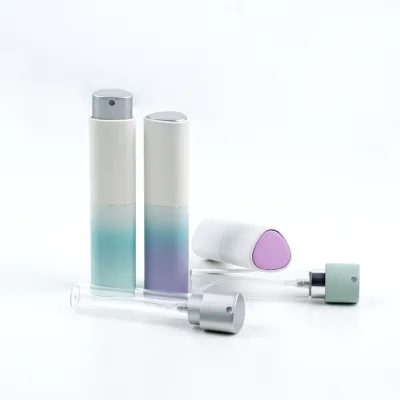




Comprehensive Sourcing Guide
Strategic Sourcing Guide for Purse Atomizers
Understanding Technical Specifications and Material Composition
When sourcing purse atomizers, buyers must first establish a clear understanding of the technical architecture that defines product functionality. The core mechanism for these devices typically relies on injection molding, a process that ensures high precision and consistency in the production of plastic components. The primary material observed in the market for these units is Polypropylene (PP), a choice driven by its chemical resistance and durability, which is essential for containing various liquid formulations without degradation.
The structural design of a purse atomizer often involves a screw sprayer type, which utilizes an external thread connection to secure the pump mechanism to the bottle body. This connection method is critical for maintaining a leak-proof seal, a common requirement for portable beauty and personal care items. The spraying shape is generally engineered as a full cone, providing an even distribution of the liquid product, which is preferable for cosmetic applications where a fine mist is desired.
Material composition extends beyond the main body. Some specialized units feature a collar made of aluminum, offering a premium aesthetic and structural rigidity. In more complex designs, the bottle may consist of an aluminum case combined with a glass inner bottle, a configuration that protects light-sensitive contents while providing a luxurious feel. The volume capacity for these devices varies, with common specifications including 8 ml, 10 ml, and 15 ml options, allowing buyers to select sizes that match specific product formulations. The physical dimensions are also a key specification; for instance, certain models are designed with a thickness of 0.5 cm and overall dimensions around 23*95mm, ensuring they fit comfortably within a handbag or pocket.
Surface handling and finishing are equally important for brand differentiation. The standard processes include screen printing, anodizing, engraving, and embossing. The surface finish can be customized to be matte or glossy, and the color is often available as requested or in any color to align with brand identity. The packaging for these units typically involves paper cartons, trading cartons, or individual PP bags and OPP packaging, depending on the supplier's standard operating procedures.
Compliance and Certification Verification
Navigating the regulatory landscape is a critical step in the procurement of purse atomizers, particularly when the intended use involves cosmetics, perfumes, or essential oils. Buyers must verify that the products meet specific international standards to ensure safety and market access. The supply chain data indicates that several manufacturers adhere to rigorous certification protocols, including FDA and CE compliance. These certifications are often listed alongside ISO standards, such as ISO and ISO13485, which are particularly relevant for medical or high-safety personal care applications.
Quality assurance is frequently underpinned by third-party verification. Suppliers may provide certificates based on SGS (Société Générale de Surveillance) or BV (Bureau Veritas) audits, ensuring that the manufacturing process complies with EU standards. It is important to note that while some listings mention "Quality base on SGS," buyers should request the actual certification documents rather than relying solely on marketing claims. The presence of "CE" and "ISO" certifications suggests a commitment to European and international quality management systems, but the specific scope of these certifications must be validated against the intended market of the buyer.
For products intended for external use only, the compliance framework must explicitly state this limitation. The "Nature" of the product is often defined as non-medical, yet the materials used must be safe for contact with skin and sensitive areas. Buyers should verify that the "Certified" status includes the specific jurisdictions where the products will be sold. For example, a product certified for the US market (FDA) may require additional testing for the EU market (CE). The standard "SGS" mentioned in the context serves as a benchmark for material safety, but the specific test results for the final atomizer assembly should be reviewed to ensure no migration of harmful substances occurs.
Cost Drivers and Pricing Dynamics
The pricing of purse atomizers is influenced by a complex interplay of material costs, manufacturing complexity, and order volume. The observed price range in the market spans from $0.06 to $20.50 USD, a significant variance that reflects differences in material quality, design intricacy, and customization levels. The lower end of this spectrum typically corresponds to basic PP models with standard screw sprayers and minimal customization. In contrast, the higher price points are associated with premium configurations, such as those featuring aluminum collars, glass inner bottles, or complex surface finishes like anodizing and embossing.
Order volume is a primary determinant of unit cost. The Minimum Order Quantity (MOQ) for these products can range from as low as 1 unit to as high as 10,000 units. A specific observation in the market indicates an MOQ of 10,000 pieces for certain standard models, which suggests that economies of scale are heavily leveraged in this industry. Buyers seeking smaller quantities may face higher per-unit costs or may need to source from suppliers with lower MOQ thresholds, which could impact the overall cost structure.
Customization is another significant cost driver. The availability of customization options, including specific colors, logo printing via silk screen or engraving, and tailored packaging, adds to the production complexity. While the base product might be affordable, the addition of custom branding and specialized finishes will increase the final price. Furthermore, the origin of the product plays a role; items manufactured in regions like Jiangsu or Jiangxi in China may have different cost structures compared to those from other locations, though the specific logistics costs must be factored in separately.
Typical Applications and Usage Scenarios
Purse atomizers are versatile tools designed for a wide array of applications, primarily centered around personal care and beauty. The primary usage category is cosmetics, where these devices are used to dispense facial mists, setting sprays, and toners. The "Full Cone" spraying shape is particularly effective for these applications, ensuring an even layer of product over the face. Beyond cosmetics, these atomizers are widely used for perfumes and essential oils, where the ability to control the dosage and maintain the integrity of the fragrance is paramount.
The versatility of the product extends to daily care and medicinal applications. The specifications indicate that these atomizers can contain liquids used for daily care routines, as well as certain medicines, provided they are for external use only. This broad applicability makes them a valuable component for brands looking to expand their product lines into travel-sized or sample-sized formats. The "Screw Sprayer" mechanism ensures that the product remains sealed and protected from evaporation, which is crucial for preserving the potency of essential oils and active cosmetic ingredients.
The industrial use of these atomizers is predominantly in the cosmetic sector, but the design allows for adaptation to other industries. The "External Thread Connection" and "Injection Molding" techniques allow for a standardized interface that can be adapted for various liquid viscosities. Whether for a high-end perfume brand or a budget-friendly daily care product, the atomizer serves as a functional bridge between the liquid formulation and the consumer. The "Single item" selling unit structure suggests that these are often marketed as individual products or as part of a gift set, enhancing their appeal in retail environments.
Supplier Evaluation and Sourcing Strategy
Evaluating suppliers for purse atomizers requires a multi-faceted approach that goes beyond simple price comparison. Buyers should prioritize suppliers who demonstrate transparency in their manufacturing processes and provide clear documentation of their capabilities. The "Brand Name" field often lists "OEM/ODM," indicating that most suppliers are equipped to handle custom orders. This is a crucial factor for buyers looking to create a unique product identity, as it allows for the customization of colors, logos, and packaging.
Geographic location is another important consideration. The supply chain data points to origins in China, specifically in provinces like Jiangsu and Jiangxi. These regions are known for their manufacturing clusters, which can offer competitive pricing and efficient logistics. However, buyers should verify the specific "Place of Origin" for each order, as quality control standards can vary between facilities. The "Delivery" location is often listed as Shanghai, which is a major port city, suggesting that these suppliers have established logistics channels for international shipping.
Service capabilities are also a key differentiator. Suppliers offering "OEM" services typically provide a range of support, from design assistance to final packaging. The "Service" attribute in the data confirms that OEM is a standard offering. Buyers should assess the supplier's ability to handle the entire lifecycle of the product, from initial prototyping to mass production. The "Single package size" and "Dimension" details provided by suppliers should be cross-referenced with the buyer's logistical requirements to ensure efficient storage and shipping.
Quality Control and Inspection Protocols
Implementing a robust quality control (QC) protocol is essential to mitigate risks associated with sourcing purse atomizers. Given the variability in the market, buyers should establish clear inspection criteria before production begins. The "Standard" field often references "SGS," "CE," "ISO," and "FDA," but these are certifications of the facility or process, not guarantees of every individual unit. Therefore, buyers must conduct their own inspections or hire third-party inspection agencies to verify that the finished products meet the agreed-upon specifications.
Key areas for inspection include the integrity of the "External Thread Connection" to prevent leaks, the consistency of the "Full Cone" spray pattern, and the durability of the "Injection Molding" process. Visual inspections should focus on surface finishes, ensuring that "Silk Screen" printing, "anodizing," or "engraving" are free from defects such as smudging or uneven application. The "Color" should match the requested specifications exactly, as "Any Colour" or "Customized" options can lead to significant variation if not strictly controlled.
Packaging integrity is another critical aspect. The "prod_packing" options, such as "Paper Carton," "Trading Carton," "1PC/PP Bag," or "OPP," must be verified to ensure they protect the product during transit. The "Single package size" and "Dimension" should be checked to confirm that the packaging is appropriate for the product size and that the "Thickness" of the packaging materials is sufficient to prevent damage. Finally, buyers should request test results for the "Liquid Contained" compatibility, ensuring that the materials used in the atomizer do not react with the specific formulation they intend to fill.
Long-Term Procurement and Supply Chain Resilience
Sourcing purse atomizers is not merely a transactional activity but a strategic decision that impacts long-term business operations. Buyers should consider the scalability of their supplier base, ensuring that the supplier can handle fluctuations in demand without compromising quality. The "MOQ" of 10,000 pieces for some models may pose a challenge for startups or those with seasonal demand, so identifying suppliers with flexible MOQs is crucial for maintaining supply chain resilience.
Lead times and delivery schedules are also vital for long-term planning. While the "Delivery" location is often Shanghai, the actual lead time can vary based on the complexity of the order and the supplier's current workload. Buyers should establish clear communication channels to monitor production progress and anticipate any potential delays. The "Place of Origin" in Jiangsu or Jiangxi suggests a robust manufacturing ecosystem, but geopolitical factors or local regulations could impact supply continuity.
Sustainability and environmental considerations are becoming increasingly important in the procurement of packaging and personal care items. While the primary material is PP, which is recyclable, buyers should inquire about the supplier's environmental practices and whether they offer eco-friendly alternatives. The "Standard" of "customized" suggests that suppliers are open to adapting their processes to meet specific sustainability goals. By building a long-term relationship with a reliable supplier, buyers can ensure a steady supply of high-quality purse atomizers that align with their brand values and market demands.
FAQs
What materials are used for purse atomizers?
The primary material is Polypropylene (PP), chosen for its durability and chemical resistance. Some specialized models feature an aluminum collar or an aluminum case with a glass inner bottle to protect light-sensitive contents.
Which certifications should I verify for safety?
Common certifications include FDA, CE, and ISO standards such as ISO13485. Quality is often verified by third-party audits like SGS or BV to ensure compliance with EU standards and material safety.
Can I customize the color and logo of the atomizer?
Yes, customization is available for colors and logos. Suppliers offer options like silk screen printing, anodizing, engraving, and embossing, allowing for matte or glossy finishes to match brand identity.
What is the typical minimum order quantity for these products?
The minimum order quantity ranges from 1 to 10,000 pieces depending on the supplier. Some standard models require an MOQ of 10,000 pieces, while others may accept smaller trial orders.
How are these atomizers typically packaged for shipping?
Packaging options include paper cartons, trading cartons, individual PP bags, or OPP bags. The specific packing method depends on the supplier's standard operating procedures and the buyer's requirements.
What is the delivery lead time and origin location?
Products typically originate from Jiangsu or Jiangxi in China with delivery from Shanghai. Lead times vary by order volume and customization, but suppliers generally maintain established logistics channels from these regions.
What liquid types can these atomizers contain?
These devices are designed for cosmetics, perfumes, essential oils, and daily care liquids. They are also suitable for certain medicines, provided the usage is strictly for external application only.